Table of Contents
ToggleHiring a house cleaning agency isn’t about admitting defeat, it’s about reclaiming time for projects that matter more. Whether you’re deep into a kitchen remodel, managing rental properties, or just done with scrubbing grout on weekends, professional cleaners can take routine maintenance off your plate. But not all agencies operate the same way, and picking the wrong one can mean wasted money or subpar results. This guide walks through what cleaning agencies actually do, how to compare services, what you’ll pay, and how to prep your home so you get the most value from every visit.
Key Takeaways
- A house cleaning agency provides trained crews with liability insurance and background checks, offering more consistency and reliability than independent cleaners at a higher cost.
- Standard cleaning runs $120–$250 for a typical home, while deep cleaning costs 30–50% more; recurring service discounts typically range from 10–20% off one-time rates.
- Choose a house cleaning agency by verifying insurance, checking employee screening practices, reading reviews, and confirming what services and cleaning products are included in the base price.
- Prepare your home by clearing clutter, securing pets, providing access, and communicating priorities to the crew so they can work efficiently and meet your expectations.
- Recurring house cleaning service builds consistency with the same crew, keeps dirt from accumulating, and often includes a discount for weekly or biweekly commitments over one-time deep cleans.
What Is a House Cleaning Agency and How Does It Work?
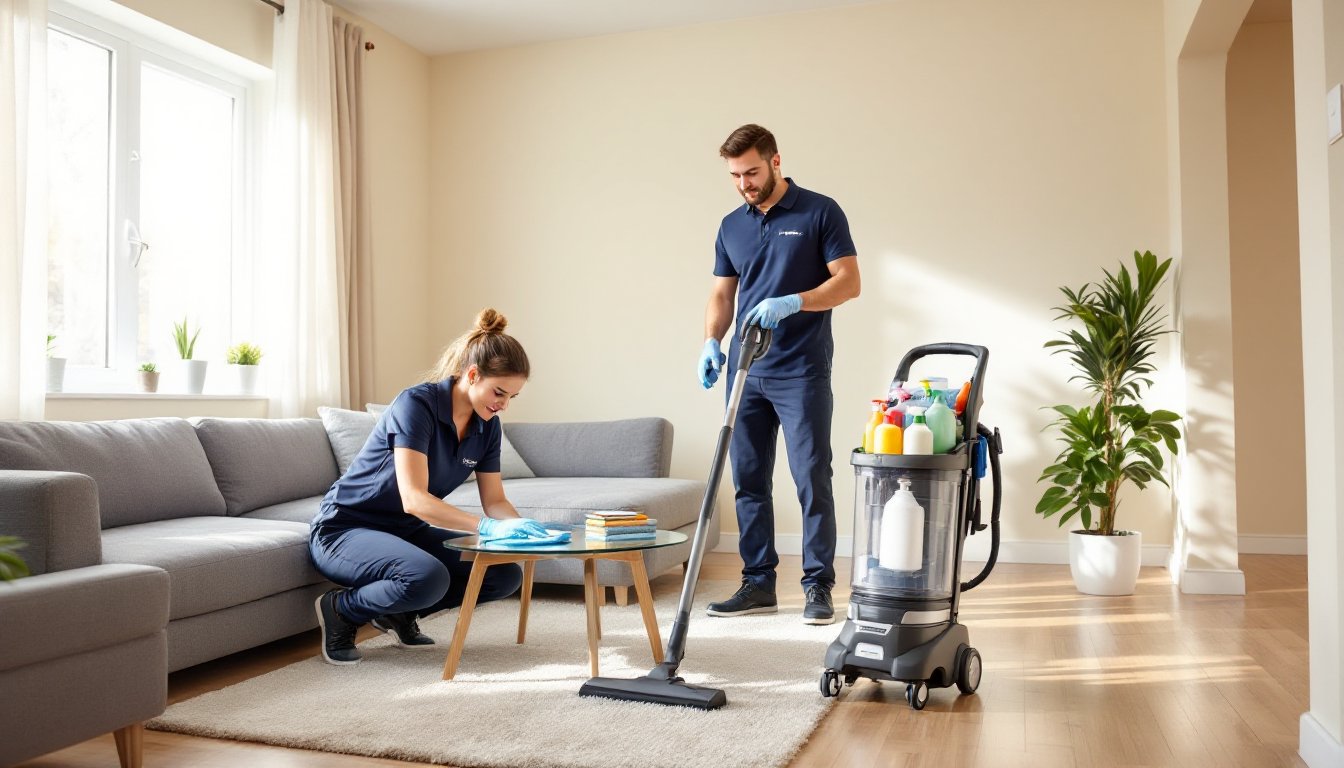
A house cleaning agency is a company that employs or contracts trained cleaners to handle residential cleaning tasks. Unlike independent cleaners, agencies typically carry liability insurance, perform background checks, and send crews rather than solo workers. They supply their own equipment and cleaning products, though some allow clients to request specific brands or green formulas.
Most agencies operate on a standard workflow: you request a quote online or by phone, they send a team to assess your space (or use square footage and room count to estimate), and you book a schedule, weekly, biweekly, monthly, or one-time. On cleaning day, a team of two to four people arrives with vacuums, microfiber cloths, mops, and commercial-grade solutions. They follow a checklist that covers floors, surfaces, bathrooms, and kitchens, usually rotating through rooms in a systematic order to maximize efficiency.
Agencies handle scheduling, payroll, and quality control. If a cleaner calls in sick, the agency sends a replacement. If you’re unhappy with the work, most offer a re-clean guarantee within 24 to 48 hours. This structure costs more than hiring an individual, but it reduces risk and ensures consistency, especially important if you’re managing multiple properties or coordinating around construction timelines.
Types of House Cleaning Services Available
Cleaning agencies offer tiered service levels, and understanding the distinctions keeps you from paying for tasks you don’t need or missing what you actually want.
Standard cleaning covers routine maintenance: vacuuming, mopping, dusting surfaces, wiping down countertops, cleaning sinks and toilets, emptying trash, and making beds. It assumes your home is in decent shape and just needs upkeep. Expect this to take two to three hours for a 1,500-square-foot home with a two-person crew.
Deep cleaning tackles baseboards, ceiling fans, window tracks, inside appliances (ovens, fridges), grout lines, and behind furniture. It’s more labor-intensive and costs 30% to 50% more than standard cleaning. Many agencies recommend starting with a deep clean, then switching to standard recurring service.
Move-in/move-out cleaning focuses on empty homes, scrubbing cabinets inside and out, cleaning light fixtures, wiping down walls, and ensuring the space is tenant- or buyer-ready. This is common for landlords or flippers prepping a property for showing.
Specialty services include post-construction cleaning (fine dust removal, adhesive residue, paint splatters), window washing, carpet shampooing, and pressure washing exteriors. These are often add-ons or booked separately. If you’ve just finished a bathroom remodel, post-construction cleaning is worth the investment, drywall dust gets everywhere, and it requires HEPA vacuums and damp-wiping to fully remove.
Recurring Cleaning vs. One-Time Deep Cleaning
Recurring service builds a relationship with the same crew, who learn your home’s quirks and trouble spots. Weekly or biweekly visits keep dirt from accumulating, so each session is faster and more effective. You’ll typically sign a month-to-month agreement, and many agencies offer a discount, 10% to 15%, for committed schedules.
One-time deep cleaning works for seasonal overhauls, pre-party prep, or selling a home. It’s billed at a higher per-hour rate because the agency can’t predict workload or build efficiency over repeat visits. For DIYers tackling a major renovation, booking a one-time deep clean after demolition and again before final inspection can save hours of your own labor and ensure no dust lingers in HVAC ducts or behind trim.
How to Choose the Right House Cleaning Agency for Your Home
Start by verifying insurance and bonding. Any reputable agency carries general liability insurance (covering accidental damage to your property) and workers’ compensation (protecting you if a cleaner is injured on-site). Ask for proof before signing a contract. If they balk, walk.
Check how they screen employees. Background checks, reference verification, and training programs are standard at established agencies. Some also require cleaners to complete in-house certification on chemical handling and equipment use. Independent contractors hired through platforms may not undergo the same vetting.
Read reviews on local service platforms to see how agencies handle complaints and whether crews show up on time. Look for patterns, one bad review is noise, but repeated mentions of missed appointments or inconsistent quality signal deeper issues.
Ask about cleaning products and equipment. Most agencies use EPA-registered disinfectants and HEPA-filter vacuums. If you have allergies, chemical sensitivities, or prefer green products, confirm they can accommodate. Some charge extra for bringing hypoallergenic or eco-certified solutions.
Clarify what’s included in the base price versus add-ons. Interior windows, inside ovens, inside the fridge, and laundry are often extras. If you assume they’re included and they’re not, you’ll be frustrated on cleaning day. Get a written checklist before the first visit.
Finally, assess communication. Do they respond quickly to quote requests? Can you reschedule without penalty? Agencies that make booking and changes easy will save headaches over the long term, especially if you’re coordinating around contractor schedules or tenant move-outs.
What to Expect: Costs and Pricing Models
Pricing varies by region, home size, service level, and frequency. As of 2026, expect to pay $120 to $250 for a standard cleaning of a 1,500- to 2,000-square-foot home. Deep cleaning runs $200 to $400 for the same space. Hourly rates range from $30 to $60 per cleaner, with most agencies sending two-person teams.
Recurring service typically discounts 10% to 20% off the one-time rate. Weekly cleaning costs less per visit than monthly, because less dirt accumulates and crews work faster. Many agencies use a flat-rate model based on square footage and bedroom count, while others charge hourly with a minimum (usually two to three hours).
Add-ons increase the bill. Interior windows might add $40 to $80. Oven cleaning adds $25 to $50. Post-construction cleaning can double the base rate due to the extra labor involved in removing fine dust and debris.
Tipping isn’t mandatory, but it’s common to tip 15% to 20% for exceptional work or during holidays. If you use recurring service, some clients tip monthly rather than per visit.
Cost estimators on home service platforms can help you benchmark local rates, but always get quotes from at least three agencies. Prices fluctuate based on demand, spring and fall are busy seasons, and you may pay a premium for last-minute bookings.
Preparing Your Home for a Professional Cleaning Service
Cleaners aren’t organizers. They can’t vacuum a floor covered in tools, toys, or lumber offcuts. Before the crew arrives, clear countertops, pick up laundry, and move fragile items or valuables into a secure spot. If you’re mid-project, cordon off active work zones with painter’s tape or a note, cleaners shouldn’t be navigating around power tools or open paint cans.
Secure pets. Even friendly dogs can get anxious around strangers or bolt out an open door. Crate them or keep them in a separate room with a sign on the door.
Make sure the agency has access. If you won’t be home, provide entry instructions, garage code, lockbox combination, or a key. Some agencies use keyless entry apps for recurring clients.
Communicate priorities. If you want extra attention on the kitchen after a messy drywall patch or need the bathrooms scrubbed harder because of recent tile work, mention it upfront. Crews work from a checklist, and without direction, they’ll split time evenly across all rooms.
Test your HVAC filter before and after cleaning. A good crew will vacuum effectively, but if you’ve had construction dust, change the filter post-clean to avoid recirculating particles. For tested cleaning practices, follow manufacturer guidelines on product application, especially on natural stone, sealed wood, or specialty finishes.
After the first visit, do a walkthrough with the crew or supervisor. Point out missed spots and clarify expectations. Most quality issues stem from unclear communication, not laziness. Once you’ve established a rhythm, recurring service becomes almost invisible, your home just stays clean without you lifting a mop.
Conclusion
Hiring a house cleaning agency is a trade-off: you pay for convenience, consistency, and peace of mind, but you give up some control over how and when the work gets done. For homeowners juggling renovations, managing rentals, or simply prioritizing time over chores, it’s often worth it. Vet agencies carefully, clarify what’s included, and prep your space so crews can work efficiently. Done right, professional cleaning becomes one less thing to manage, and one more reason your home stays functional while you focus on the projects that actually need your hands.